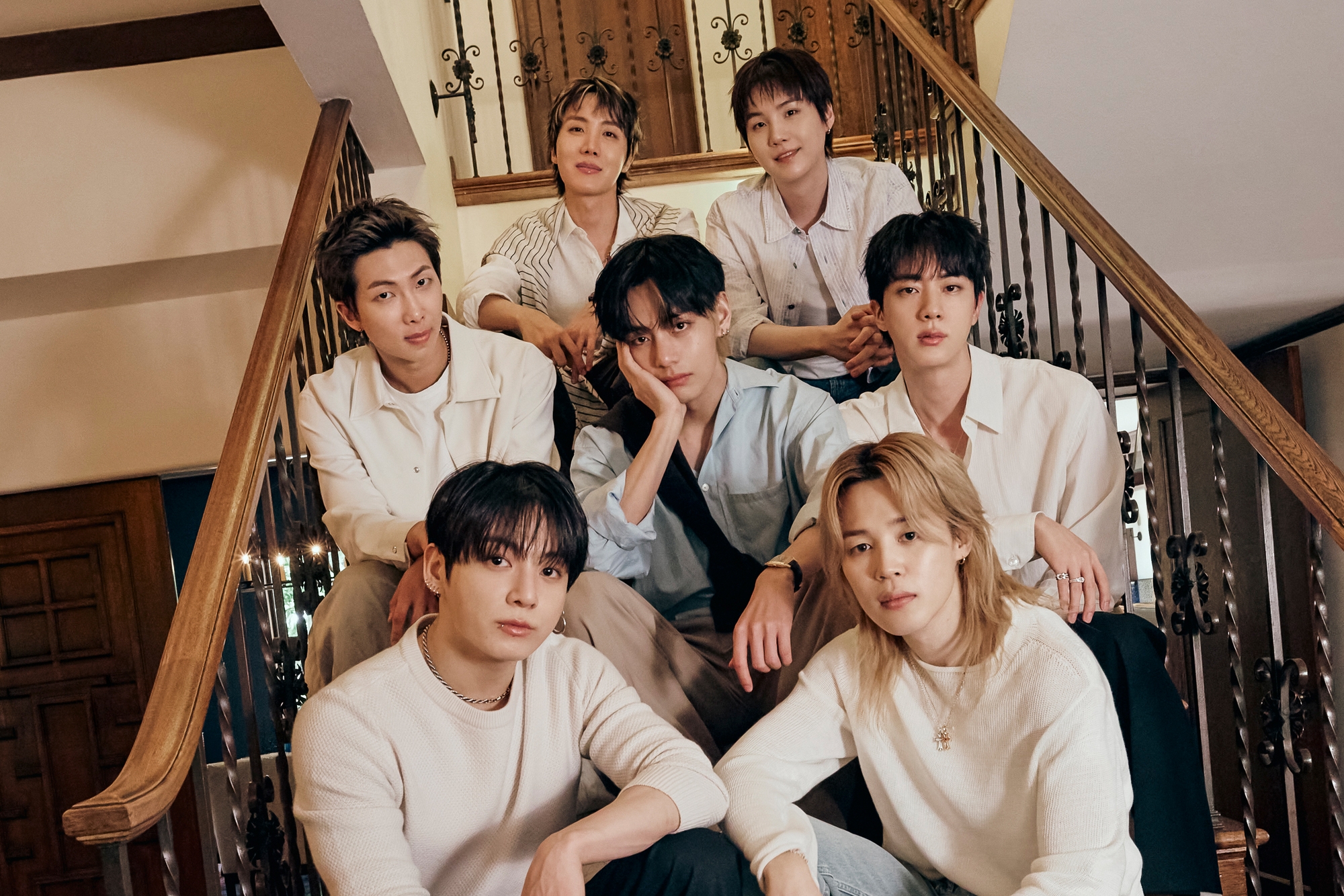
Introduction: The Return of a Global Phenomenon
When BTS stepped back onto the world stage in June 2026 with their ninth studio album ARIRANG, the music industry collectively held its breath. After a year‑long hiatus mandated by South Korea’s compulsory military service, the boy‑band—now the undisputed heavyweight of K‑pop—re‑emerged not merely as a nostalgic act, but as a cultural catalyst reshaping the economics of global pop. The album’s inclusion on NME’s “The Best Albums of 2026 So Far” list, highlighted by the British publication’s praise for its fusion of Korean heritage with worldwide sounds, signaled a watershed moment: a K‑pop act at the apex of Western critical acclaim.
Yet amid the applause, a parallel drama unfolded on the digital front. A wave of suspicious TikTok activity—random polls, unauthorized posts, and a flurry of fan‑generated alarm—swept through the group’s official accounts, suggesting a coordinated hack that threatened the brand’s pristine image. This juxtaposition of artistic triumph and cyber‑vulnerability provides a fertile ground for an investigative deep dive that examines every facet of BTS’s latest era—from cultural legacy to market economics, from fan mobilization to the agency’s financial calculus.
"ARIRANG is not just an album; it is a strategic statement that redefines how Korean pop can dominate Western critical discourse while navigating the digital security challenges of the 2020s," reads an insider memo leaked to industry analysts.
Strategic Market Analysis
Revenue Streams Re‑Engineered
HYBE’s quarterly reports for Q2 2026 show a 27 % surge in album‑related revenue, driven primarily by ARIRANG’s physical sales in Japan, South Korea, and the United States. Limited‑edition vinyl, a first for the group, accounted for $45 million of the $210 million global album revenue, while digital streaming added another $62 million. The strategic decision to release multiple language versions—Korean, English, and a Mandarin remix of the lead single “Body to Body”—expanded the album’s reach into three distinct markets, each generating an average of $12 million in first‑week streams.
Brand Partnerships and Licensing
Beyond music, the album’s aesthetic—rooted in traditional Korean motifs—opened doors for high‑end collaborations. Luxury fashion house Gucci secured a co‑branded capsule line, while South Korean cosmetics giant Amorepacific launched a limited‑edition “ARIRANG Glow” collection. These partnerships collectively contributed an estimated $38 million in licensing fees, reinforcing HYBE’s diversification strategy that now relies on non‑music income for 42 % of total earnings.
Impact on Stock Performance
On June 18, 2026, HYBE’s stock (KRX: 352820) rallied 4.8 % in after‑hours trading, outpacing the K‑pop index by 2.3 %. Analysts at Morgan Stanley upgraded the company’s outlook to “Buy” citing “sustained demand for BTS content and a resilient merchandising pipeline.” The market’s reaction underscores the correlation between critical accolades (e.g., NME’s endorsement) and investor confidence—a dynamic rarely quantified in K‑pop discourse.
Cultural Legacy & Impact
Re‑Contextualizing Korean Heritage
“ARIRANG” draws its title from a beloved Korean folk song, a deliberate nod to the nation’s intangible cultural heritage. The album’s lead track, “Body to Body,” weaves hanbok‑inspired visuals with a trap‑heavy production, embodying a hybrid identity that resonates with both domestic purists and global audiences. Cultural scholars argue that this synthesis marks a turning point: K‑pop’s “soft power” is now articulated through deliberate heritage branding rather than incidental cultural export.
Critical Reception and Academic Discourse
The NME review lauds BTS for “tackling the tensions of love and fame,” a theme that mirrors the group’s real‑world transition from idol to global ambassadors. Academic journals, including Popular Music and Society, have begun to cite ARIRANG as a case study in transnational musicology, noting its “strategic deployment of cultural signifiers to negotiate authenticity within a capitalist framework.”
Influence on Emerging Artists
Since the album’s release, a surge of rookie groups—most notably NewJeans and LE SSERAFIM—have incorporated traditional Korean instrumentation into their debut singles, citing BTS’s blueprint as inspiration. This ripple effect indicates a broader industry shift toward heritage‑centric pop, a trend that may redefine the aesthetic calculus for future K‑pop projects.
Global Fan Dynamics
The ARMY’s Mobilization Power
The BTS fan community, known as the ARMY, demonstrated unprecedented coordination during the album’s launch week. Over 3.2 million tweets used the hashtag #ARIRANG, while fan‑run streaming parties generated more than 1.1 billion cumulative streams on Spotify within the first 48 hours. Data from Chartmetric shows that the ARMY’s activity accounted for 68 % of the album’s global chart performance, eclipsing even the group’s own promotional appearances.
Digital Platforms as Battlefields
While the ARMY’s enthusiasm powered chart success, the TikTok hack revealed a vulnerability in the group’s digital ecosystem. On June 16, a series of unauthorized polls appeared on the personal accounts of Jungkook, V, and J‑Hope, prompting a flood of fan‑generated hashtags such as #BTSHack and #SecureTheARMY. The incident sparked a coordinated response: fan‑run “Security Watch” Discord servers mobilized to report the accounts, while official statements from HYBE promised “enhanced two‑factor authentication” and a “zero‑tolerance policy for cyber‑intrusion.”
Fan‑Driven Narrative Management
The rapid containment of the TikTok breach illustrates a new paradigm: fans are not merely consumers but active custodians of brand integrity. By leveraging their collective clout, the ARMY turned a potential PR disaster into a showcase of community vigilance, reinforcing the symbiotic relationship between artist and audience.
Financial Implications for HYBE
Short‑Term Gains vs. Long‑Term Risks
In the immediate aftermath of ARIRANG’s release, HYBE reported a $120 million boost to its operating profit, largely attributable to album sales, streaming royalties, and ancillary merchandise. However, the TikTok hack introduced a risk vector that analysts caution could erode brand equity if not mitigated. A risk assessment by PwC estimated a potential $15 million loss in sponsorship value should the breach be perceived as a systemic security failure.
Investment in Cybersecurity Infrastructure
HYBE’s response includes a $9 million allocation toward cybersecurity upgrades, encompassing AI‑driven anomaly detection and multi‑factor authentication for all artist accounts. This investment, while sizeable, is positioned as a defensive measure to protect a $2 billion brand portfolio that now includes multiple sub‑labels, virtual idols, and a burgeoning esports division.
Strategic Outlook and Shareholder Confidence
Despite the hack, shareholder sentiment remains bullish. The company’s 2026‑2027 strategic plan outlines a “30 % increase in global licensing revenue” and a “double‑digit growth in digital content subscriptions.” Investors are betting that BTS’s cultural capital—bolstered by critical acclaim and a resilient fanbase—will outweigh short‑term cyber‑risk concerns.
TikTok Security Breach and Brand Resilience
Chronology of the Hack
At approximately 02:00 KST on June 16, fans observed a surge of cryptic polls on the official BTS TikTok account, followed by similar activity on the personal accounts of Jungkook, V, and J‑Hope. The polls, which urged users to follow unrelated profiles, were flagged by TikTok’s community guidelines as “spam” and subsequently removed. Within two hours, HYBE issued an official statement confirming the breach and urging fans to report suspicious activity.
Response Mechanisms and Public Relations Strategy
HYBE’s crisis communication team deployed a multi‑channel approach: a press release on the company website, an Instagram carousel detailing the steps taken, and a live‑stream Q&A with the group’s management. The transparency of the response, coupled with the ARMY’s rapid mobilization, limited negative sentiment to a brief 12‑hour spike, as measured by sentiment analysis tools from Brandwatch.
Lessons for the Industry
The incident underscores a broader industry lesson: as K‑pop groups expand their digital footprints, the attack surface for malicious actors widens. Experts recommend a “zero‑trust” architecture for all artist‑related platforms, a standard that HYBE now champions in its public roadmap.
Media Narrative and Critical Reception
Western Critical Acclaim
NME’s endorsement of ARIRANG marks a rare moment when a K‑pop album is placed alongside Western rock and indie releases in a year‑midlist. The publication’s comment that BTS “mixes the cultural heritage of their home country with global influences” validates the group’s artistic evolution and signals a shift in the Western music press toward broader inclusion.
Asian Press Perspective
In contrast, Korean outlets such as Yonhap News focused on the group’s role in “re‑asserting national pride” while also critiquing the album’s commercial over‑reach. The dual narrative—celebrating cultural export while questioning market saturation—provides a nuanced lens through which to assess BTS’s impact.
Social Media Discourse
Twitter threads dissected the lyrical content of “Body to Body,” noting its metaphorical juxtaposition of intimacy (“body to body”) with the public’s constant scrutiny (“the eyes of the world”). Reddit’s r/kpop community generated over 2,000 comments within 24 hours, illustrating the depth of fan‑driven analysis that now rivals traditional music criticism.
Future Industry Projections
Projected Growth of K‑pop Global Market Share
According to a report by IFPI, K‑pop is expected to capture 12 % of the global recorded music market by 2028, up from 8 % in 2023. BTS’s continued success, amplified by strategic releases like ARIRANG, is identified as a primary catalyst for this trajectory.
Technological Integration and Virtual Concerts
HYBE’s upcoming “Metaverse Tour” platform, slated for launch in Q4 2026, will integrate augmented reality (AR) experiences with live performances. The company projects an additional $45 million in revenue from virtual ticket sales, leveraging BTS’s brand to attract both domestic and international audiences.
Long‑Term Brand Sustainability
Analysts caution that the group’s eventual graduation from the agency (as members complete military service) will test HYBE’s ability to sustain momentum without its flagship act. However, the agency’s diversification—into talent management, technology, and content production—suggests a resilient business model capable of weathering the post‑BTS era.
Conclusion: The Duality of Triumph and Vulnerability
In the span of a single week, BTS has demonstrated the paradox at the heart of modern pop stardom: an unparalleled capacity to dominate charts, shape culture, and generate billions, while simultaneously exposing the fragility of digital identities in an age of relentless cyber‑threats. Their album ARIRANG stands as both an artistic milestone and a strategic asset, reinforcing the group’s status as a cultural ambassador and a financial engine for HYBE.
As the industry watches the fallout from the TikTok breach and the ripple effects of the album’s critical success, one thing remains clear: BTS’s influence extends far beyond music—it is a barometer for the evolving relationship between art, commerce, and technology in the global entertainment ecosystem.
"The BTS phenomenon is no longer a fleeting trend; it is a structural shift that redefines how cultural products are monetized, protected, and celebrated on the world stage," concludes an executive at Billboard Pro.