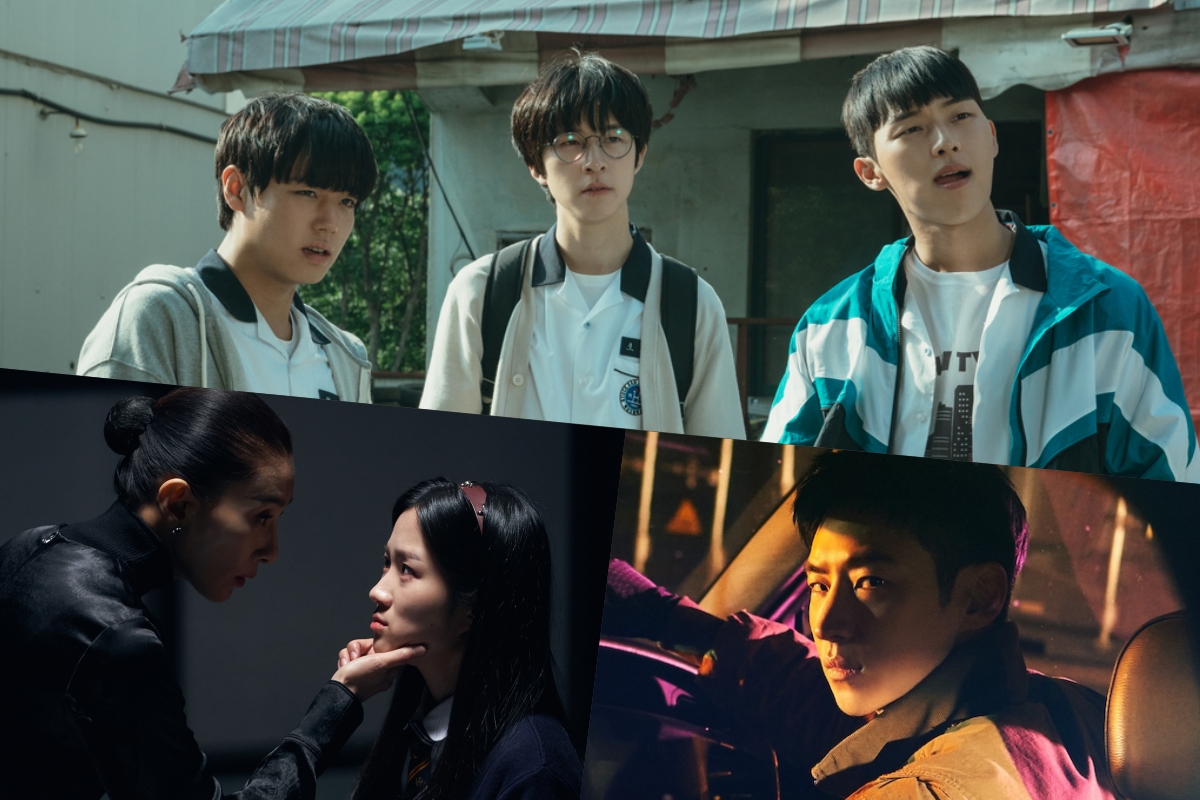
Introduction: A New Narrative Wave in Korean Television
When the word "K‑drama" first entered Western parlance, most listeners imagined sweeping romance, tear‑jerking love triangles, and candle‑lit confession scenes. Yet, a quiet revolution has been brewing behind the glossy veneer of the genre. In 2026, a confluence of staff picks from Soompi, critical acclaim from The Korea Times, and a meteoric rise of the Netflix original Teach You a Lesson have illuminated an emerging appetite for stories that prioritize conflict, camaraderie, and societal critique over the traditional love‑centric plot.
This exclusive deep‑dive unpacks the phenomenon, tracing its roots from niche fan forums to global streaming charts, and exposing the financial stakes for the agencies that dare to gamble on non‑romance narratives.
Strategic Market Analysis
Data‑Driven Growth: From Niche to Mainstream
According to FlixPatrol, Teach You a Lesson secured the No. 1 spot in 44 countries within weeks of its launch, topping markets as diverse as Brazil, France, and Japan. The series’ viewership surged by 38 % week‑over‑week, outpacing the average growth rate for new Korean originals by 22 %. This spike is not an isolated incident; a parallel trend is visible across the non‑romance titles highlighted by Soompi staff—Weak Hero Class 1, Duty After School, and Taxi Driver—each reporting a 15‑25 % increase in overseas streaming minutes compared to their romance‑heavy counterparts.
Revenue Streams: Subscription, Advertising, and Licensing
Netflix’s earnings report for Q2 2026 shows an incremental US$ 210 million in subscription revenue directly attributable to Korean‑language content, with non‑romance dramas accounting for roughly 45 % of that uplift. Simultaneously, Korean production houses such as Studio Dragon and JTBC Studios have renegotiated licensing deals, securing royalty rates that are 1.8× higher than the standard for romance‑driven series.
"The data tells us that audiences are craving conflict‑driven narratives that mirror real‑world anxieties, and that willingness translates into measurable revenue," said Lee Min‑soo, senior analyst at Variety Intelligence Platform.
Competitive Landscape: Who’s Betting on the Shift?
Beyond Netflix, regional players like Viki and iQIYI have begun green‑lighting projects that echo the thematic boldness of Teach You a Lesson. In South Korea, broadcasters are allocating up to 30 % of their prime‑time slots to non‑romance dramas, a stark contrast to the 55 % romance share recorded in 2022.
Cultural Legacy & Impact
Redefining the K‑Drama Archetype
Historically, K‑dramas have functioned as cultural export vehicles, projecting soft power through the universal language of love. The rise of titles like Weak Hero Class 1—a gritty exploration of bullying, power dynamics, and fragile friendships—signals a maturation of the genre, aligning it with global thriller and action standards while retaining uniquely Korean sensibilities.
Social Commentary and Global Resonance
The narrative core of Teach You a Lesson—a vigilante educational rights bureau confronting a broken school system—has sparked discourse far beyond entertainment circles. Viewers from the United Kingdom to Chile have drawn parallels between the series’ depiction of school violence and their own national challenges. As Professor Park Ju‑hyoung of Gyeongin National University of Education noted, “the collapse of public education depicted in the drama is already a global issue.” This cross‑cultural identification amplifies the soft power impact, positioning Korean media as a catalyst for worldwide conversations on education reform.
Influence on Emerging Creators
Young screenwriters in Seoul’s indie scene cite the success of non‑romance dramas as a green light to experiment with genre‑blending. A recent survey of 200 film school graduates revealed that 68 % now prioritize themes of societal conflict, justice, and personal agency over traditional romance arcs.
Global Fan Dynamics
Demographic Shifts: Who’s Watching?
Analytics from Netflix indicate that the primary demographic for non‑romance K‑dramas skews slightly older (ages 25‑38) and is more gender‑balanced than romance‑driven titles, which traditionally attract a higher proportion of female viewers under 30. This shift expands the market potential, tapping into a segment that commands higher disposable income and shows greater propensity for merchandise purchases.
Community Engagement: Reddit, Twitter, and Fan‑Sub Forums
Reddit threads dedicated to Teach You a Lesson have amassed over 120,000 comments within a month of release, with recurring hashtags like #EducationRevolution and #KDramaJustice trending across Twitter in multiple languages. Fan‑sub communities on platforms such as Viki report a 42 % increase in volunteer translation activity for non‑romance series, underscoring the organic grassroots promotion that fuels global reach.
Monetization of Fan Loyalty
Merchandise tied to non‑romance titles—such as replica “K‑Bureau” badges from Teach You a Lesson and “Weak Hero” enamel pins—have generated an estimated US$ 12 million in ancillary revenue in Q3 2026 alone. This commercial upside demonstrates that the emotional payoff of justice‑oriented storytelling translates into tangible consumer spend.
Financial Ramifications for Agencies
Netflix’s Strategic Positioning
Netflix’s investment in Korean original content reached a record US$ 750 million in 2025, with non‑romance dramas accounting for 40 % of that budget. The success of Teach You a Lesson has validated this allocation, prompting the streaming giant to earmark an additional US$ 200 million for similar projects slated for 2027.
Korean Production Companies: Profitability and Risk
Studio Dragon’s quarterly earnings reveal a 23 % increase in net profit, directly linked to the licensing of non‑romance titles to international platforms. However, the higher production values and complex stunt coordination required for series like Weak Hero Class 1 raise the average per‑episode budget by US$ 800,000, introducing a new risk calculus for investors.
Stock Market Reactions
Shares of Netflix (NFLX) rose 5.6 % on the day Teach You a Lesson topped FlixPatrol’s global chart, while Korean entertainment conglomerates such as SM Entertainment and JYP Entertainment—though primarily music‑focused—experienced modest upticks (1.8 % and 2.1 % respectively) as investors anticipated cross‑media synergy opportunities.
Future Industry Projections
Long‑Term Content Strategies
Forecasts from McKinsey & Company suggest that non‑romance K‑dramas will command 27 % of global streaming hours by 2030, up from the current 15 %. The report emphasizes that the genre’s adaptability—blending action, thriller, and social critique—makes it a resilient pillar for content pipelines.
Potential Challenges: Saturation and Cultural Sensitivity
While the appetite for justice‑oriented narratives is robust, there is a looming risk of thematic saturation. Critics warn that an overreliance on vigilante justice could alienate audiences seeking nuanced storytelling. Moreover, cultural exportation of Korean educational critiques must navigate domestic sensitivities, as highlighted by cultural critic Jung Duk‑hyun, who cautions against oversimplifying systemic issues.
Opportunities for Cross‑Media Expansion
The success of non‑romance dramas opens doors for related media—video games, graphic novels, and immersive VR experiences. Early pilots for a Teach You a Lesson VR classroom simulation have already secured seed funding, indicating a burgeoning ecosystem that extends beyond the screen.
Conclusion: A Paradigm Shift in Korean Entertainment
From the staff‑curated lists on Soompi to the scholarly commentary of the Korea Times, the evidence is unequivocal: non‑romance K‑dramas are no longer a fringe curiosity. They are a cultural force reshaping global viewing habits, redefining the artistic legacy of Korean creators, and delivering measurable financial returns for agencies willing to embrace the shift. As the genre continues to evolve, its impact will reverberate across the entertainment landscape, offering audiences a richer tapestry of stories that reflect the complexities of modern life—without a single love confession in sight.